A regional Nutcracker is two or three performances, but it is never only two or three performances. Around the ticketed weekend a company builds a whole apparatus — school matinees, subsidised seats, a children’s party, press coverage, a programme book full of advertising — and that apparatus is where a surprising amount of the organisational purpose lives. This page documents what surrounded the performance in Erie.
The Special Performance Series
The company ran what it called a Special Performance Series, described in its own giving literature as a programme that “affords underserved communities the experience of attending performances and meeting exceptional dance artists face to face, every season”. It sat under the highest tier of the company’s giving structure, alongside endowment gifts — which is a meaningful placement. It was not treated as marketing outreach but as the thing the endowment existed to protect.
In practice a series of this kind means blocks of seats given to school districts, care organisations and community groups, usually at a weekday performance with a shortened running time. The economics only work because the production is already built: the set is hung, the orchestra is contracted and the dancers are in the theatre anyway, so the marginal cost of one more house is comparatively small. It is the single most efficient piece of arts access a company at this scale can run, and it is almost always the first thing cut when money is tight.
School performances
The record includes dedicated school performances of the Nutcracker as a distinct event from the public weekend. These typically run in the morning, use an abbreviated version of the ballet, and are pitched at an age group that has never seen live theatre of any kind. For a great many children in a mid-sized city, a school matinee of the Nutcracker is the first orchestra they ever hear.
The children’s party
The company ran a Sugar Plum Fairy Party alongside the production — a separately promoted event where families met dancers in costume, played games and took part in a draw to present the Sugar Plum Fairy with her bouquet at the Sunday performance. It is a small thing that does a lot of work. It converts a two-hour ballet into an afternoon, it gives the youngest members of the audience a reason to come back the following year, and it makes the dancers into people rather than figures at a distance.
The bouquet detail is the clever part: a child who has been chosen to walk on stage at the end of a performance will remember that performance for the rest of their life, and so will their family.
The programme book
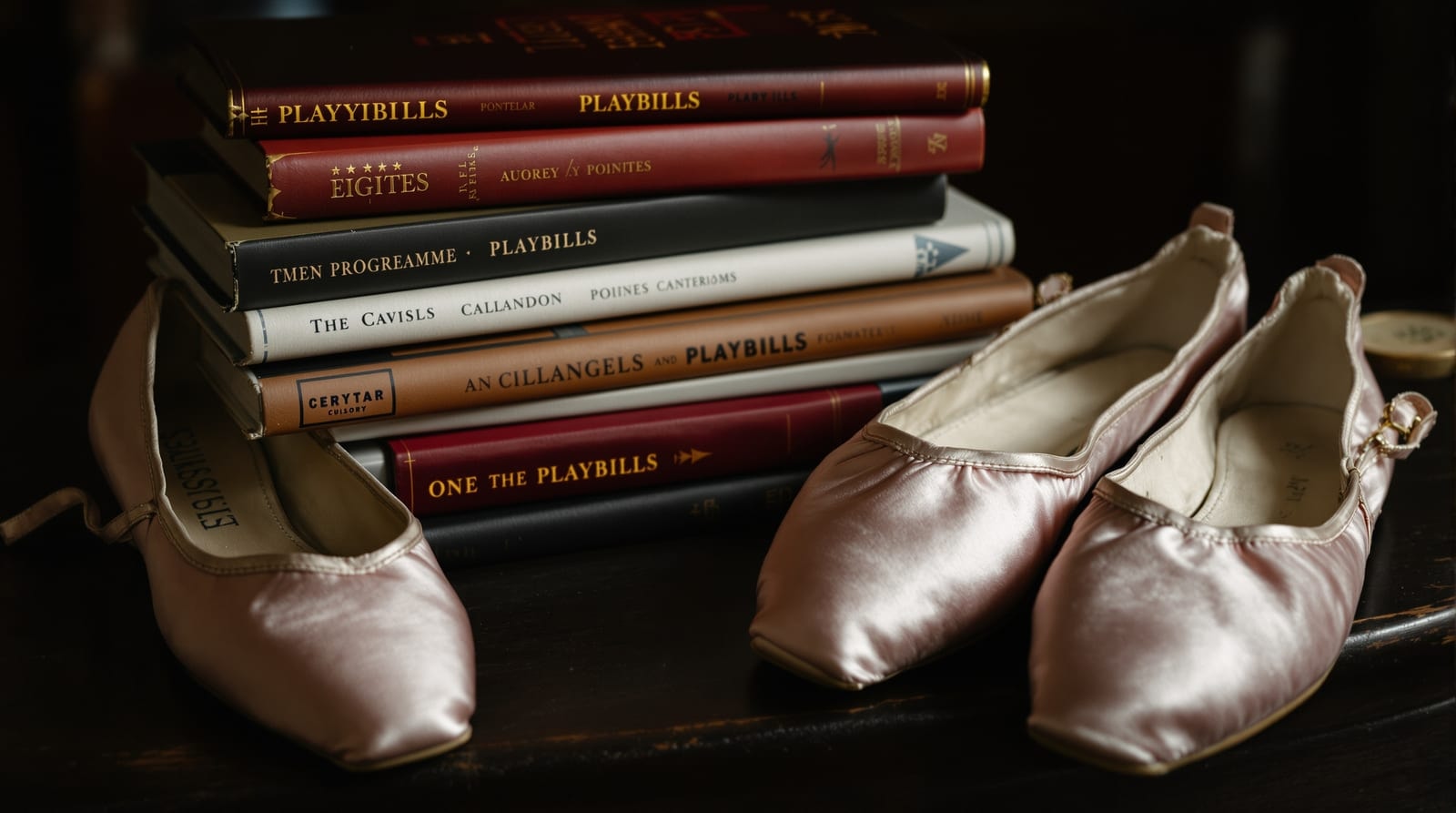
A December programme book is a piece of fundraising dressed as a souvenir. Local businesses buy pages, the company sells them, and the margin funds the parts of the season no ticket buyer will ever pay for. The company solicited that advertising through the production itself — programme advertising was sold directly — and the resulting book is often the most complete account of a given year’s cast, staff and sponsors. It is also the document most likely to have been thrown away.
Press and the local record
The company’s Nutcracker was covered as a civic fixture rather than as an arts event, which is the usual pattern in a city of Erie’s size. Regional arts listings and the local press carried the announcement each autumn, and the wider regional promotion came from exactly these sources: the theatre’s own site, regional arts councils, the local alternative weekly’s calendar, a university news blog. That is a healthy pattern. It means the organisation was written about by the institutions around it rather than only by itself.
One consequence for anyone researching a company like this: the press record is largely uncatalogued. Local arts coverage from the 2000s and 2010s sits in newspaper archives and defunct blog platforms rather than in any dance-specific index, and a great deal of it has simply gone. The Chronicling America newspaper archive at the Library of Congress is the best public starting point for the earlier decades, though its coverage thins sharply after the mid-twentieth century.
Accessibility as programming
The clearest single example of the company treating access as artistic programming rather than as compliance is documented separately: the sensory-friendly Nutcracker built with a university special-education institute, which redesigned the performance itself rather than simply reserving seats at it. Read alongside the Special Performance Series, it suggests an organisation that had thought carefully about who was not in the room.
For the production side of the same weekend, see theatre week.