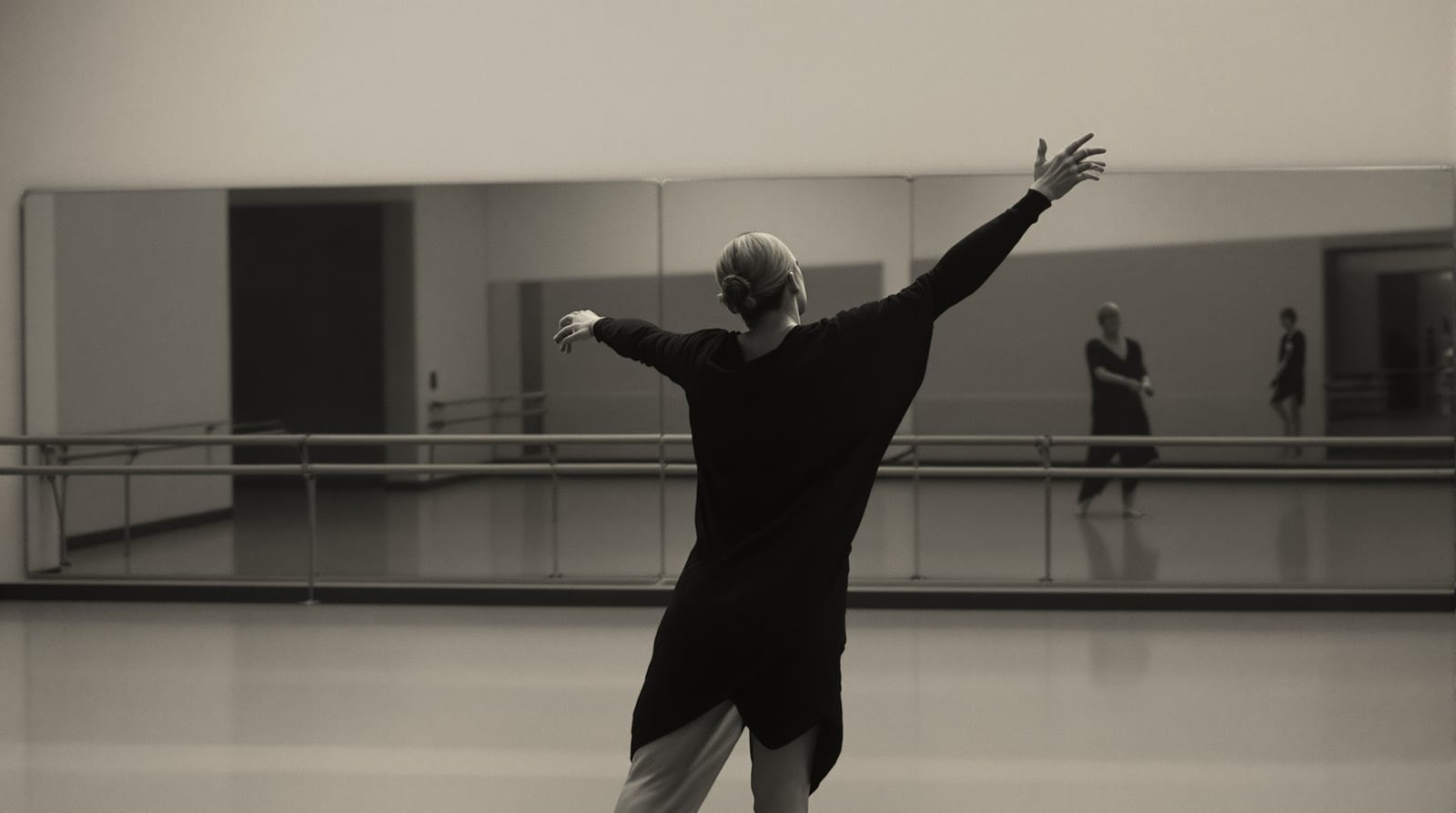
The company called this part of itself the artist collective, which was a better description than the usual “staff” or “artistic team”. A collective, in this context, meant a group of artists who between them held the artistic posts, taught in the school, danced or staged the work, and carried the outreach — rather than a hierarchy with a director at the top and employees underneath.
The directors of record
Across the company’s documented history the artistic and school leadership included Sharon Filone, school director from 1974 to 2004; the artistic directors Robert Steele, Jeff Satinoff, Robert Vickery, Gina Ribera-Illingworth and Lesley Bories-Scalise; Christina Maria Adelhardt, artistic and executive director from the mid-1990s and later ballet director and artistic advisor; Alethea Bodine, who directed the organisation from 2008 and held the children’s division and arts-in-education portfolios; Kim Howell as school director; and Darren McIntyre as artistic director and ballet master in the last documented period.
These are named because their appointments were public facts about a public-facing arts organisation, and because the work they made is the subject here. What follows is about the roles and the artistic decisions, not about the individuals’ personal histories; private staff biographies are omitted, for the reasons set out on the faculty page.
What a director changes
The turnover of artistic directors in American regional ballet is high, and each arrival visibly moves the repertoire. The pattern across this company’s record is legible.
Directors who came from the classical companies brought restagings — the standard nineteenth-century repertoire, gala pas de deux, the Bournonville and Petipa material that a director carries in their body from having danced it. Directors who were choreographers brought originals: a lake-monster ballet built on local legend in 2002, a Cinderella co-produced with the local playhouse, children’s ballets on Beauty and the Beast, Peter and the Wolf and The Little Mermaid. The final documented period brought a full-length Wizard of Oz using the 1939 film score, and a multimedia Dracula co-produced with a visiting Ohio company.
That range — children’s story ballets at one end, a gothic rock-scored Dracula at the other — is wider than most companies of this size attempt, and it is the direct consequence of who happened to be in the chair.
The separation of ballet direction from artistic direction
For part of its history the company held the artistic director post and the ballet director post separately, with the latter also serving as principal instructor and artistic advisor. That separation is worth flagging because it is a deliberate structural choice with a clear rationale: it lets the artistic director be a choreographer and a programmer while somebody else guards the classical technique across both the company and the school.
Companies that collapse the two posts into one tend to see their syllabus drift with each new director. Companies that keep them separate, and especially those that fill the ballet-director post with a former artistic director who is staying on, retain institutional memory across leadership changes. Erie did the latter for a period, which is one reason its academy documentation reads as coherently as it does.
Artists in residence and guests
The collective was porous by design. Resident guest artists ran workshops every eight to ten weeks and were available for private instruction. Visiting choreographers were engaged to make work. Principals were imported for the December production and stayed long enough to rehearse with the corps. Collaborating organisations included a contemporary company in Philadelphia, a company in Ohio, a conservatory in Pittsburgh and the dance department of the university in Erie itself.
The practical effect is that the artistic standard of the building was continually being set by people from outside it. For an organisation in a mid-sized city, several hours from any major company, that porousness is not a nice-to-have; it is the only defence against a slow drift into provincialism.
The education and outreach portfolio
One post in the collective carried the arts-in-education work, the children’s division and the Dance for PD class simultaneously. That combination looks eccentric until you notice what it has in common: all three involve teaching dance to people who are not, and will not become, professional dancers. It is a coherent specialism, and giving it to one person rather than distributing it as everybody’s secondary duty is why the outreach strand has a documented record at all.
The holder of that portfolio was also, at one point, president of the city’s dance consortium — a body of local non-profit dance organisations that ran master classes and a periodic festival of dance. A company that puts its education director into the chair of the sector’s shared body is a company that has decided cooperation is worth more than competition, in a city with a limited audience to fight over.
For the wider field, Dance/USA is the national service organisation, and the Pennsylvania Council on the Arts administers the roster-artist and residency programmes that several of this company’s artists worked within.
Related: the orchestra and its conductors, and the dancers.